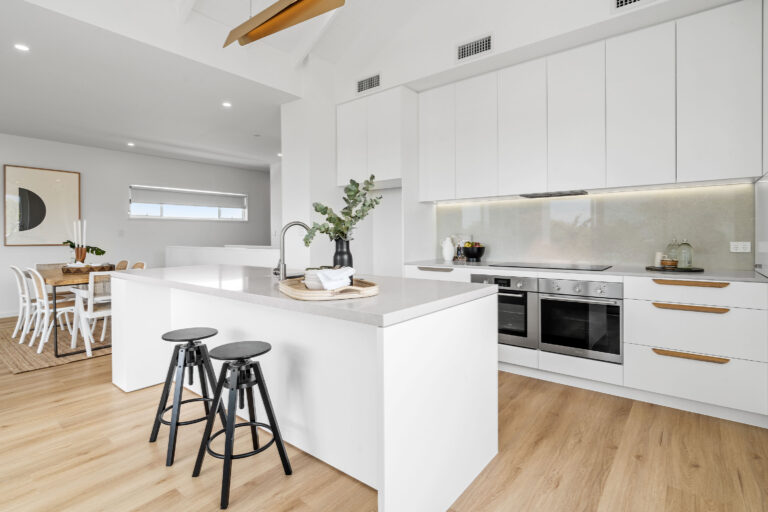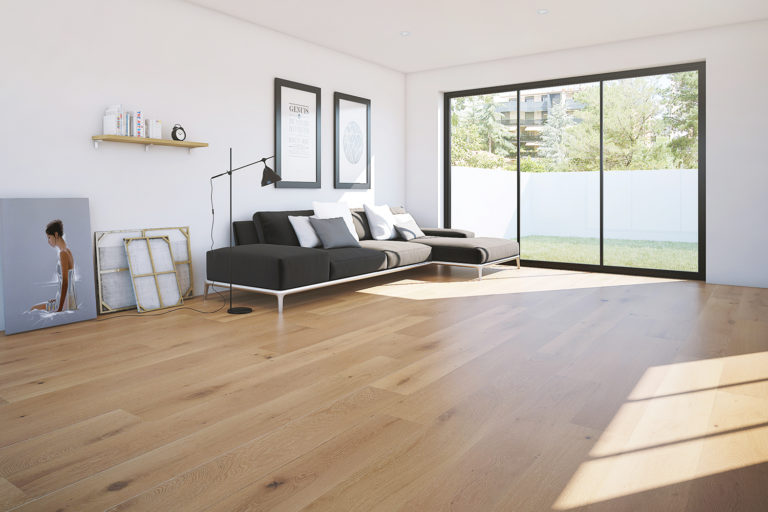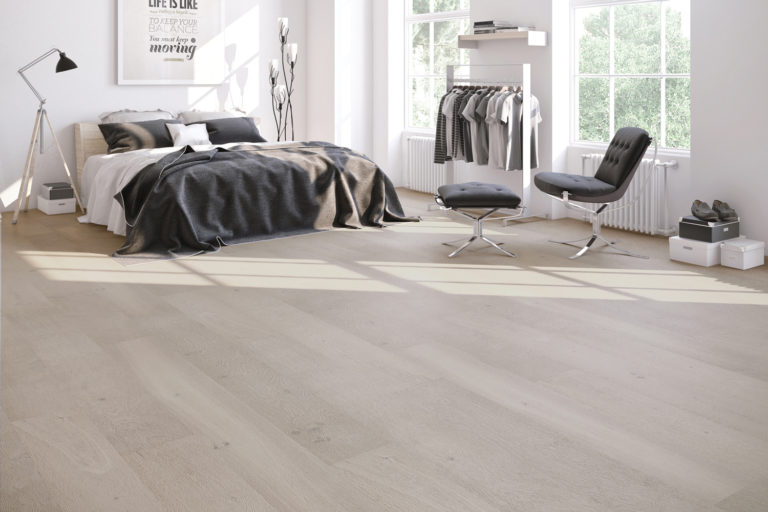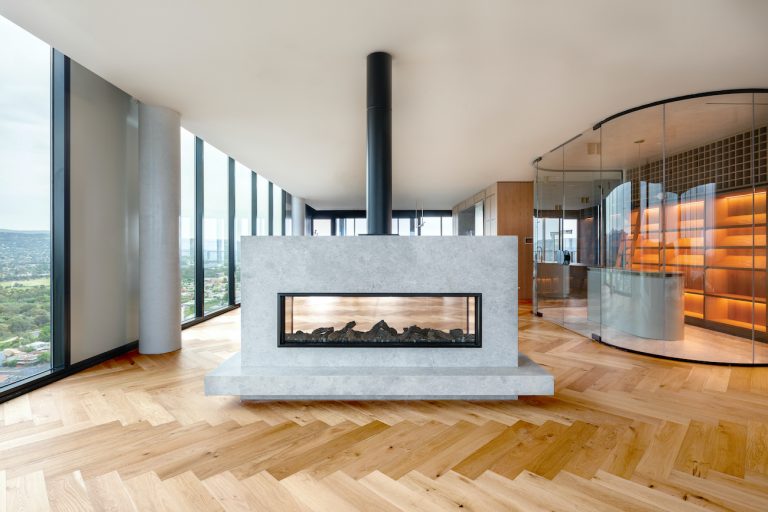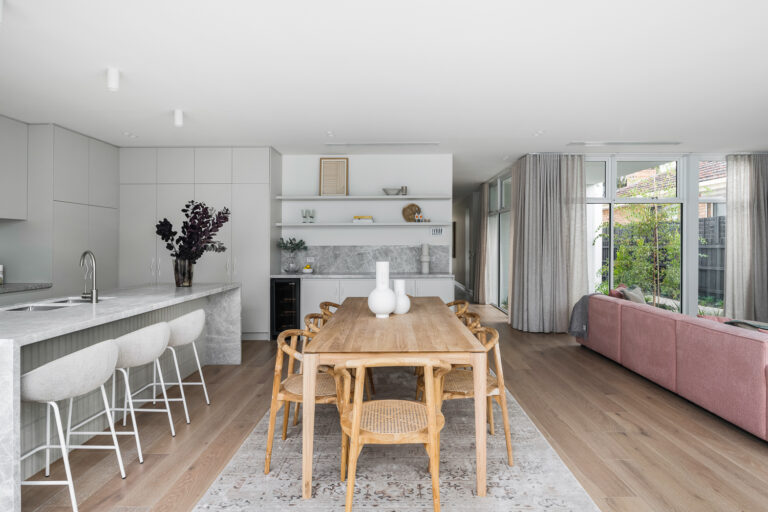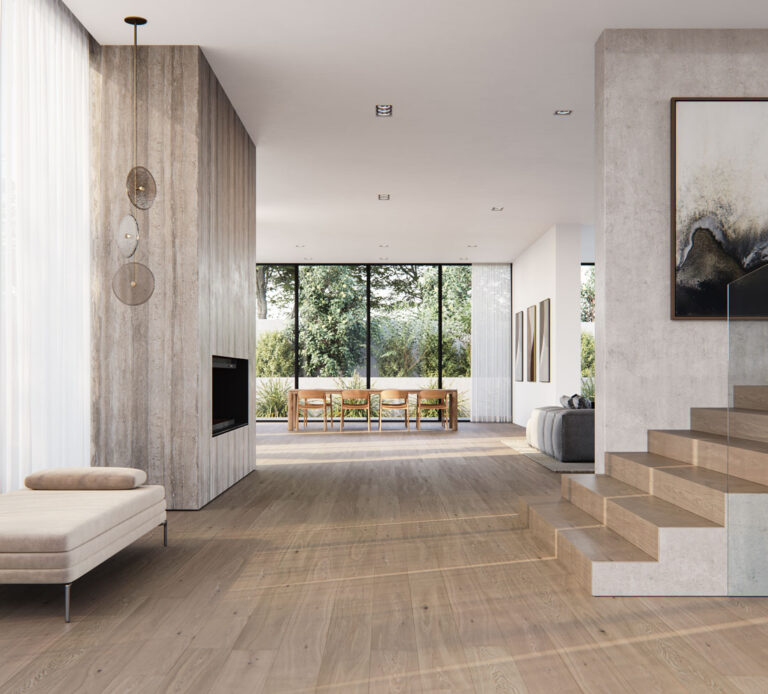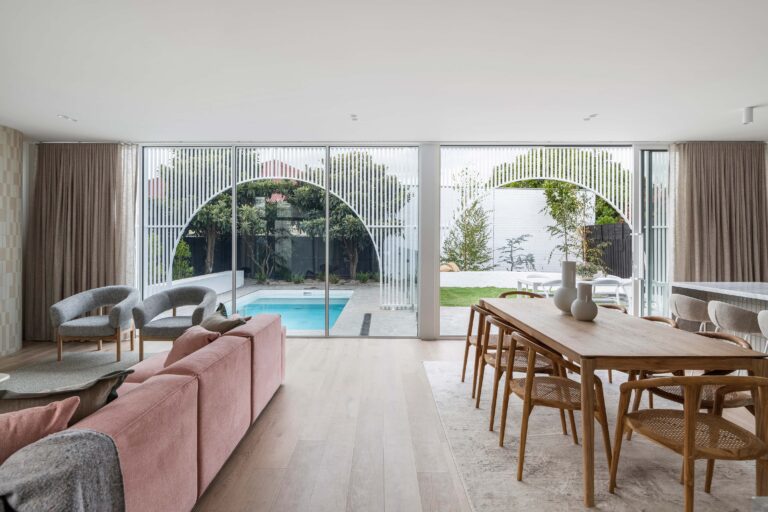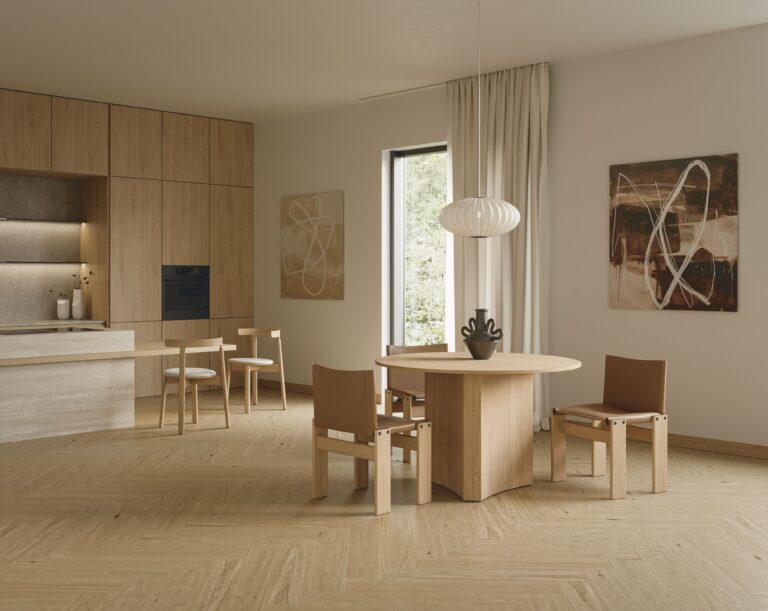
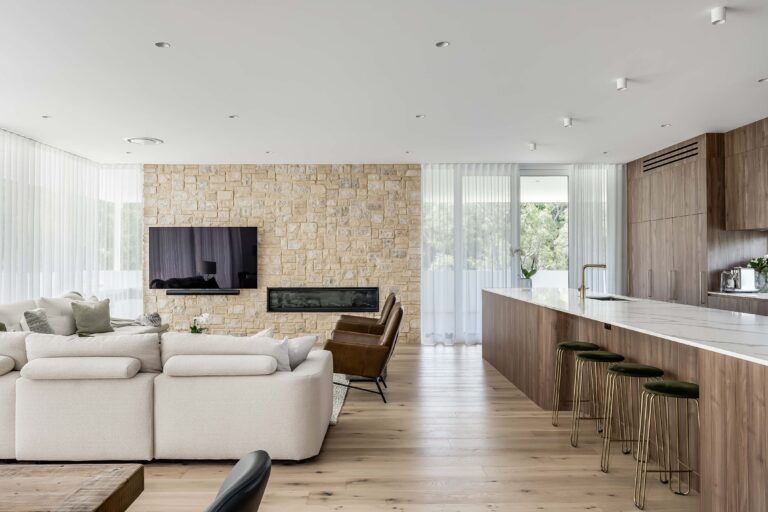
Selecting the right floor is one of the more considered decisions in any interior project – one that shapes how a space feels underfoot, how it holds up over time, and how it responds to the rhythm of daily life.
Hybrid flooring and engineered timber are two of the most specified options for Australian interiors. Both bring a refined aesthetic to living areas, bedrooms, apartments and design-led residential spaces. Both are built to perform in busy households. But they are distinct products with different constructions, different strengths, and different ideal environments.
When it comes to hybrid flooring vs engineered timber, the better choice is rarely the most durable or the most premium – it’s the one that’s right for how the space is used, how the home is lived in, and what the interior is asking for.
Let’s walk through the key differences.
What is engineered timber flooring?
Engineered timber flooring is constructed with a genuine timber surface layer over a stable, multi-ply core – delivering the warmth, texture and natural variation of real wood, with greater dimensional stability than traditional solid timber.
That real timber surface is what sets it apart. Every board carries its own grain, tone and character. Knots, subtle colour variation and natural figuring are not flaws to be designed around – they are the point. Engineered timber doesn’t replicate the look of wood. It is wood.
For those seeking a floor with genuine natural character and long-term appeal, engineered timber is often the considered choice. It brings warmth to contemporary interiors, softens architectural spaces and sits as comfortably in a classic home as it does in a refined modern renovation. It’s also a floor that rewards a long view, a well-chosen engineered timber floor adds a quiet sense of permanence and perceived value to a home, particularly when the colour, grade and finish are selected with care.
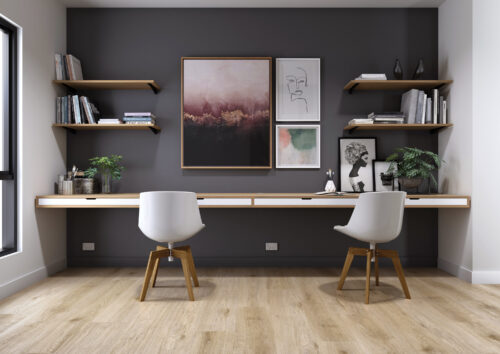
What about hybrid flooring?
Hybrid flooring is a modern floating floor engineered to balance the visual warmth of timber-look flooring with high levels of durability and water resistance. Built around a rigid core with a decorative surface layer and protective wear layer, it offers a stable, considered feel underfoot and reliable everyday performance.
It has become a popular choice in Australian homes for sound reasons. For families, rental properties, apartments, holiday homes and busy households and commercial applications where practicality needs to lead without sacrificing aesthetic, hybrid flooring offers a versatile and low-maintenance solution that suits the way most homes are genuinely lived in.
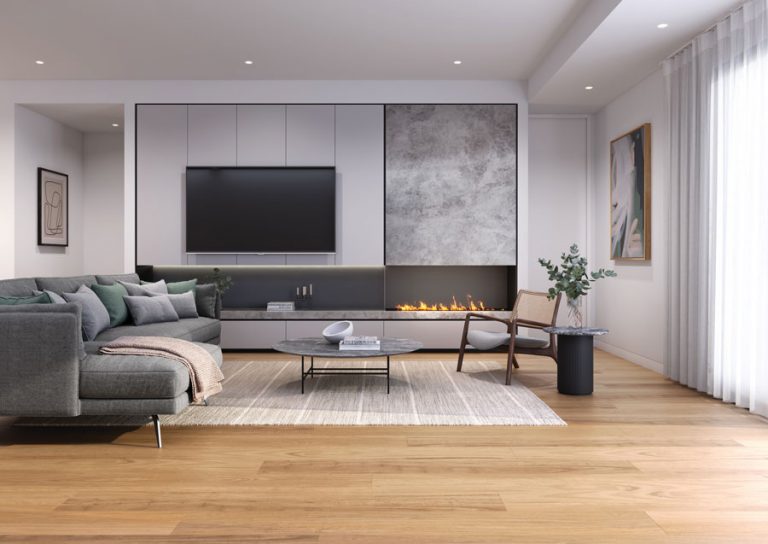
Premium hybrid floors have moved well beyond the purely functional. Refined timber-inspired surfaces, textured finishes and considered colour palettes now allow hybrid flooring to sit with ease in contemporary, design-led interiors – delivering a clean, consistent aesthetic with the kind of practical performance that suits the pace of modern Australian living.
Appearance and design
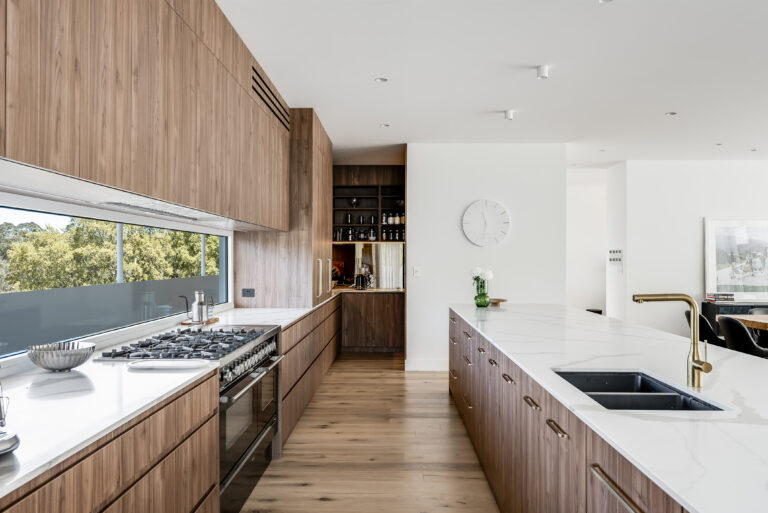
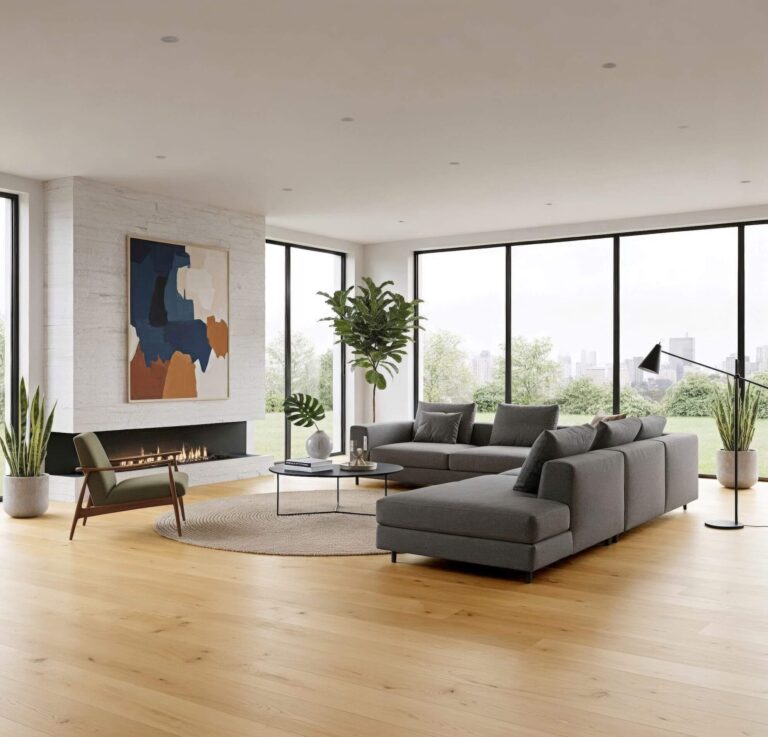
For those who want the look and feel of real timber, engineered timber is difficult to surpass. Natural oak, blackbutt, spotted gum and other timber finishes carry a depth that comes from the timber itself – light moves differently across its surface, the grain holds subtle irregularities, and the floor develops a quiet, lived-in quality over time. It brings warmth, depth and a sense of permanence to the spaces it grounds. That natural authenticity is a significant reason engineered timber is so often chosen for high-end homes, architectural projects and interiors where materiality is central to the design.
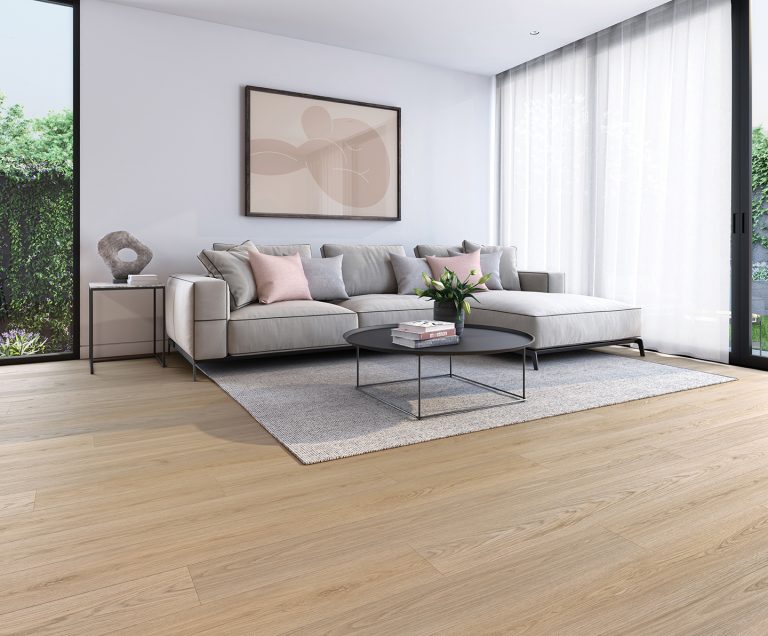
Hybrid flooring offers a different kind of visual appeal, one defined by refinement and consistency. A considered, even tone across the floor with minimal board-to-board variation suits certain interiors beautifully, particularly in clean contemporary spaces, apartments and investment properties where a cohesive aesthetic is the goal.
When comparing the two from a design perspective, the distinction comes down to whether the space calls for natural variation and individual character, or a polished and consistent finish. Neither is more correct than the other, it comes down to what the interior is asking for.
Durability and everyday performance
Both products are engineered for modern living, but they respond to wear in different ways.
- Hybrid flooring is generally the more resilient option for high-traffic households. Its protective wear layer is built to resist everyday scuffs, marks and general abrasion – a considered choice for homes with children, pets and busy shared spaces where the floor needs to perform consistently without demanding attention.
- Engineered timber is equally built to last, but as a genuine natural surface it rewards thoughtful care. Like any real timber floor, it can develop signs of wear over time, and for many, this is precisely part of its appeal. A well-maintained engineered timber floor ages with grace, accumulating character and depth that only deepens with the life of the home.
For households where everyday resilience and low-maintenance performance lead the decision, hybrid flooring is often the stronger fit. For those drawn to natural beauty and a floor that carries the story of the home over time, engineered timber offers a quiet and enduring advantage.
Water resistance and wet areas
Water resistance is one of the most significant factors in choosing between the two.
- Hybrid flooring is generally the stronger choice where moisture is part of daily life -kitchens, laundries, entryways and busy family homes where spills are an everyday reality. While specifications vary across ranges, hybrid flooring is engineered to handle moisture with considerably more confidence than timber-based products, making it a naturally practical fit for these environments.
- Engineered timber performs beautifully across living rooms, dining areas, bedrooms, hallways and open-plan spaces, but it asks for the right conditions in return. Correct subfloor preparation, appropriate installation and sensible ongoing care are all important. Prolonged moisture exposure, standing water or excessive humidity can affect long-term performance, so moisture-prone areas deserve careful consideration before specifying a timber floor.
For spaces where moisture resistance is a key requirement, hybrid flooring is often the more assured choice. For dry internal living spaces where natural atmosphere and premium finish are the priority, engineered timber remains the considered benchmark.
Comfort and feel underfoot
Engineered timber has a natural warmth that is immediately felt. As a genuine timber surface, it offers a warm, grounded and naturally comfortable underfoot that suits bedrooms, living areas and spaces where comfort and atmosphere are central to the design. Installed correctly, it brings a quiet sensory quality to an interior that is difficult to achieve with any other material.
Hybrid flooring can also deliver a comfortable underfoot experience with its integrated acoustic backing. Hybrid Flooring is well suited to floating installations and performs consistently across a range of compliant subfloor conditions. In apartments and multi-level homes, acoustic performance warrants careful consideration, as body corporate or strata requirements will often apply.
In both cases, the installation system is as important as the product itself. Underlay, adhesive, subfloor preparation and expansion allowance all shape how a finished floor feels and performs over time and should always be selected in accordance with the product’s technical specifications.
Maintenance and cleaning
Hybrid flooring is a straightforward surface to maintain. Regular sweeping or vacuuming followed by damp mopping with a suitable Neutral PH cleaner is generally all that is required for everyday care. Its wear layer is designed for convenience, making it a natural fit for households where ease of maintenance is as important as aesthetic.
Engineered timber rewards a more considered approach. Timber-safe cleaning products, protection from excess moisture and routine care in line with the manufacturer’s guidelines all contribute to a floor that holds its beauty over time. Protective measures such as furniture pads, entrance mats and timely spill care all contribute to a floor that maintains its character and finish over the long term.
The distinction between the two is less about difficulty and more about disposition. Engineered timber suits those who appreciate natural materials and find satisfaction in caring for them well. Hybrid flooring is well suited to households where a refined, stylish surface with minimal upkeep is the priority.
Installation considerations
Hybrid flooring is commonly installed as a floating floor, making it an efficient and practical choice for a wide range of projects that have a compliant subfloor to Australian standards. It is often specified for renovations where speed, simplicity and minimal disruption to the existing space are important considerations.
Engineered timber can be installed as a floating floor or glued down, depending on the product, site conditions and project requirements. That flexibility is an advantage, but it comes with a corresponding need for precision. Subfloor preparation, moisture testing, expansion allowances and correct adhesive or underlay selection all require careful attention before installation begins.
This is where professional guidance makes a meaningful difference. A beautifully made floor will only perform to its potential when it is installed over a complying subfloor, with the right system and in the right conditions. The strongest results always come from aligning product, installation method and site conditions from the outset.
Cost and long-term value
Hybrid flooring is generally the more accessible option, both in terms of product cost and installation efficiency. For homeowners renovating with a defined budget, or investors seeking an attractive and durable floor across multiple properties, hybrid flooring can represent a strong and considered investment.
Engineered timber typically sits at a higher price point, reflecting the use of real timber, premium construction and a natural finish that carries long-term aesthetic value. While the upfront cost is greater, a well-chosen engineered timber floor can contribute meaningfully to the perceived quality and value of a home in a way that few other flooring choices can.
The most useful comparison is not simply which product costs less, but which product makes the most sense for the home, the budget and the intended lifespan of the floor. For a long-term family home or premium renovation, engineered timber may well justify the investment. For a rental property, apartment or high-traffic environment where resilience and practicality lead, hybrid flooring is often the stronger fit.

Choosing the right flooring for family living?
For busy family households, hybrid flooring is often the more practical choice. It handles spills, everyday activity, pets and heavy foot traffic with ease – a floor that performs consistently in the background without placing demands on the way the home is lived in.
Engineered timber can work beautifully in family homes, particularly across living areas and bedrooms. The key is selecting the right product for the space, understanding the nature of the material and maintaining it with a degree of care. Timber is not fragile, however as a natural surface, it will respond to the environment it inhabits and the life lived around it.
In a family home, the decision often comes down to how the household lives and what it values most. For those who want a resilient, easy-care surface that holds up effortlessly to daily life, hybrid flooring is a strong fit. For those drawn to the warmth and character of real timber and who find satisfaction in a floor that develops its own story over time, engineered timber can feel like the more natural choice.
Choosing the right flooring for apartments?
Apartments introduce a distinct set of considerations, particularly around acoustic performance, strata requirements and installation systems.
- Hybrid flooring can be a strong choice for apartment living having an integrated acoustic underlay giving compliance for most acoustic requirements (up to a 6-star rating). Its durability, dimensional stability and ease of maintenance make it well suited to compact, high-use spaces where practical performance is a priority.
- Engineered timber can also be appropriate for apartments, but acoustic and installation requirements need to be assessed carefully before specifying. Depending on the building, a glued installation, acoustic underlay or a specific tested assembly may be required to meet the relevant performance standards.
In either case, strata or body corporate requirements should always be confirmed before a product is selected. The floor itself is only part of the equation – the complete installation system, including underlay, adhesive and subfloor preparation, is what determines how the floor performs within the building over time.
Finding the right floor with Terra Mater
At Terra Mater, flooring is approached with both design intent and long-term performance in mind. The range spans premium engineered timber, hybrid, vinyl and laminate flooring, supported by compatible underlay, adhesive and installation solutions – allowing each project to be considered as a complete flooring system rather than a product in isolation. The board, the subfloor, the installation method, the acoustic requirements, the finish and the ongoing care all form part of that picture.
- For homeowners, that breadth of support makes the selection process more considered and more confident.
- For builders, designers and flooring professionals, it provides a stronger foundation for specification.
- And for anyone weighing up engineered timber vs hybrid flooring, it means the final decision can be grounded in the right balance of beauty, performance and practicality for that specific space.
The most useful starting point is always the space itself. Its use, its conditions, its acoustic requirements and what the interior is asking for will guide the decision more reliably than any general comparison. Both engineered timber and hybrid flooring can be the right answer – the better floor is simply the one that belongs in the space, supports the way the home is lived in, and holds its integrity and beauty over time.